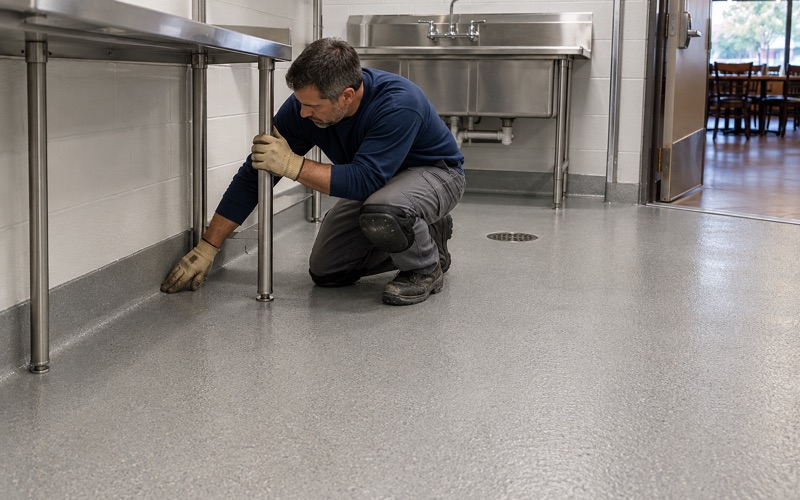
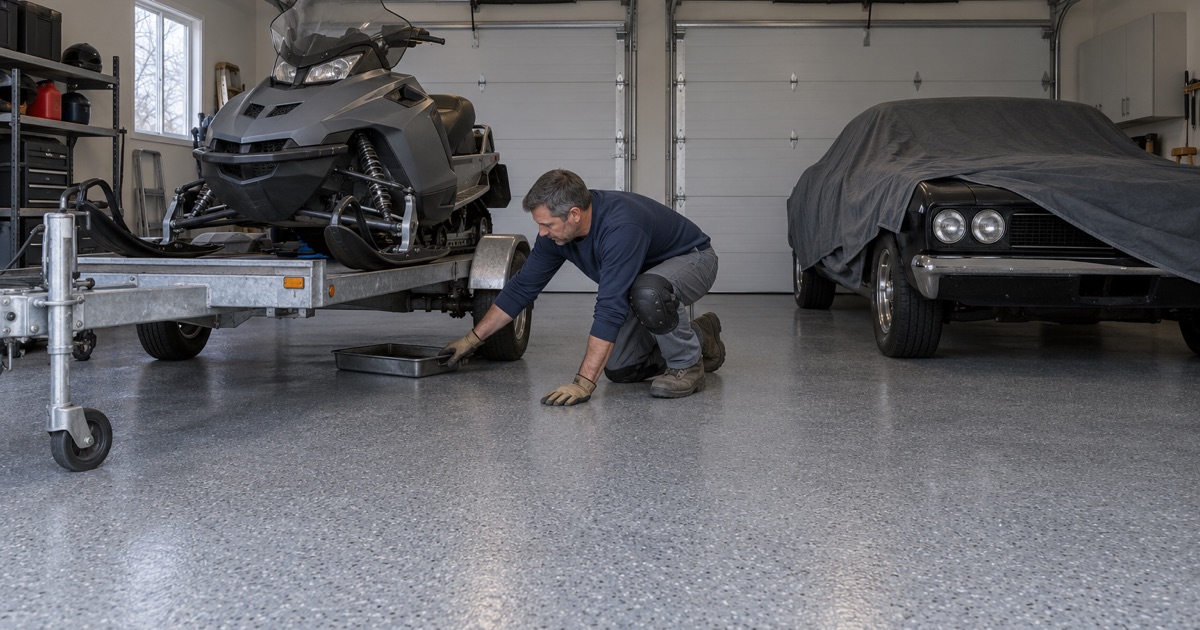
Brookfield Epoxy Flooring brings more than 20 years of epoxy flooring in Sussex to garages that do more than park cars. Some of the floors we look at here carry a boat, a pair of snowmobiles and an ATV through the winter, along with the family vehicles. That changes what the coating has to survive, and it changes how we plan the job.
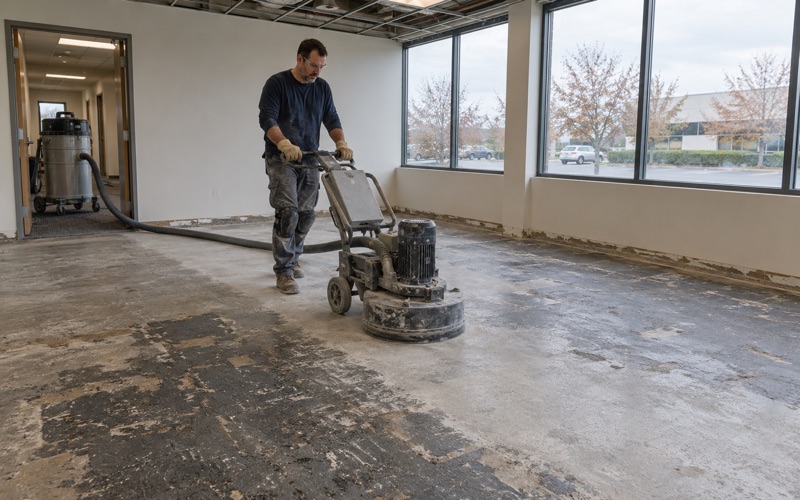
Every slab we coat is opened mechanically first, with a diamond grinder or a shot blaster, and we never acid etch. Moisture testing sits in the written scope as its own line item, because a dry-looking garage slab is not proof of a dry one. The proposal then names the product, the system build and the finished thickness, so the floor that goes down can be checked against the floor that was quoted.
In one Sussex subdivision, the reason a garage holds all of that is written into a recorded document. Below we explain what it says, what it means for the concrete underfoot, and where our work begins and ends.
Where Vista Run Keeps Its Boats, Sleds and ATVs
Sussex is a Waukesha County village of 7.24 square miles that counted 11,487 residents in the 2020 census. Census estimates count 2,956 owner-occupied detached houses in the village, and 358 housing units built in 2020 or later.
Neumann Developments’ Single-Family Subdivision
Vista Run is a single-family subdivision by Neumann Developments, listed on the south side of CTH VV, west of Highway 164. Its Declaration of Protective Covenants was recorded with the Waukesha County Register of Deeds on November 18, 2021, as Doc. 4633914, and amended in 2022 and 2023 as later phases were added.
The declaration binds Vista Run lots, not the rest of the village. It is a private declaration recorded by the developer, and its rules run with those lots alone.
Garage Only, Except for 24 Hours a Week
Section 6.3 says trailers, campers, boats, snowmobiles, all-terrain vehicles, motorcycles and the like may not be stored or parked on a lot except in a garage. The two other exceptions are narrow: outside a garage for no longer than 24 hours in a one-week period, or as the Architectural Control Committee approves.
In practice, a family that owns a fishing boat and a couple of sleds has one place to keep them between trips. The same section also limits ordinary outdoor parking to 24 consecutive hours without the board’s consent, so the driveway is not a long-term option either.
No Sheds or Outbuildings of Any Size
Section 2.5.13 closes the usual escape route: storage sheds or outbuildings of any size, temporary or permanent, are not permitted under any circumstance. There is no backyard shed for the mower, the snowblower or the fuel cans, and no detached pole building for the boat.
Section 6.4 adds the garbage and recycling carts, which belong in the home or garage except for the 12 hours before and after pickup. Put those rules together and the attached garage becomes the only enclosed storage on a Vista Run lot, so its floor is a toy-storage floor as much as a car floor.
Looking for epoxy-flooring closer to Waukesha? See Epoxy-Flooring in Waukesha.
Fuel, Oil and Melt on a Toy-Storage Floor
A garage that shelters only cars sees road salt, brine and tire wear. One that also shelters a boat, two snowmobiles and an ATV sees something else on top of that: gasoline from tanks and fuel lines, oil and grease from engines and trailer hubs, and meltwater carrying whatever the machines picked up on the trail.
Gasoline and Oil Drips
Fuel and oil do their damage by sitting. A drip under a parked sled can stay on the floor for weeks while the machine waits for snow, and a bare slab drinks it in and keeps the stain.
A sealed resin floor keeps those fluids on the surface where they can be wiped up. We will not quote a gasoline-resistance figure from a brochure, because chemical resistance varies by product and by chemical, and dwell time matters as much as the fluid. What we do is choose a topcoat suited to fuel and oil contact, and tell you plainly that drips should still be wiped up rather than left for a season.
Meltwater, Brine and Salt
Snowmobiles come back in packed with snow and ice, and the cars beside them track in road salt and calcium chloride brine all winter. That water pools along the edges of the stall and under the trailer tongue, then evaporates and leaves a crust behind.
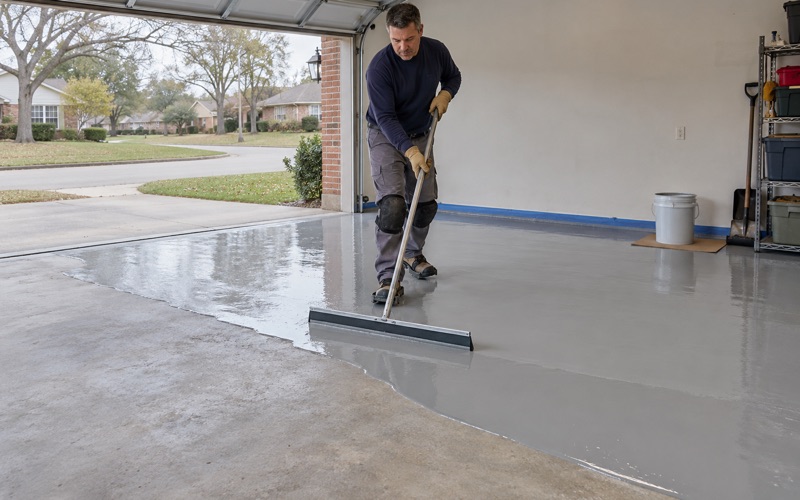
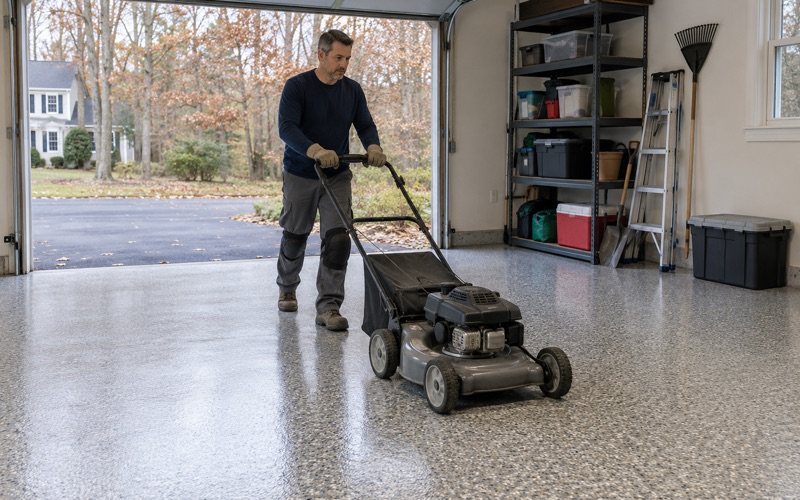
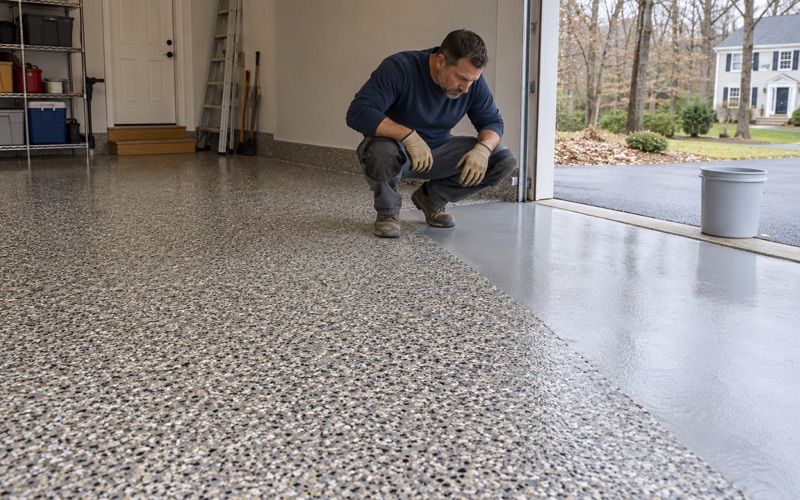
We build these garage floors for that salt load from the start. A vinyl flake or quartz aggregate broadcast adds body to the system and hides the scuffs a busy garage collects, and a polyaspartic or polyurea topcoat over 100% solids epoxy gives a tight, cleanable film that a squeegee can clear.
Testing the Slab Under the Stalls
Under the SPS 322.38 exception, Wisconsin’s Uniform Dwelling Code does not require a vapor retarder beneath an unconditioned attached garage slab. A garage floor can look dry and still move moisture upward, which is why testing is part of our scope rather than an upsell after a coating has blistered.
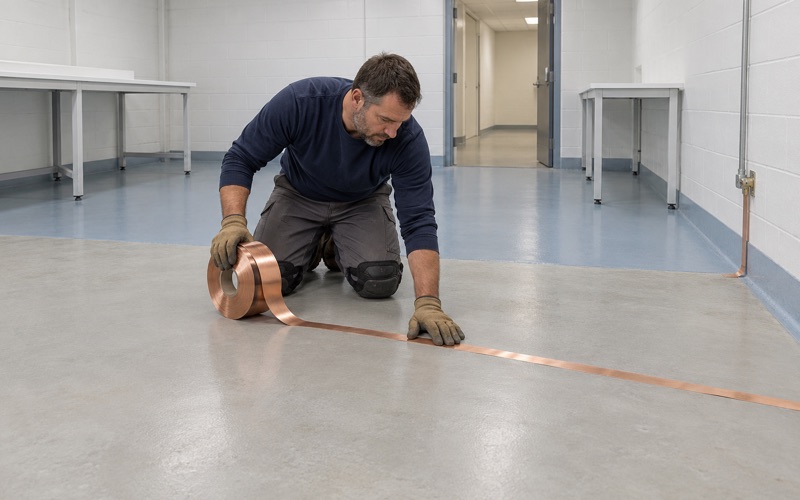
On any slab we may use ASTM F2170 relative humidity probes, an ASTM F1869 calcium chloride test, or a quick ASTM D4263 plastic sheet check, depending on the floor. When the numbers call for it, a moisture-mitigation primer goes down first, and the warranty exclusions, moisture from below named first, are read to you before anything is signed.
Laying Out a Garage That Holds Cars and Toys
Every home in Vista Run must have an attached garage for at least two cars, with a minimum of 440 square feet. At the minimum, that is a floor, not a warehouse, and fitting two vehicles plus seasonal machines onto it takes some planning before the coating goes down.
Where the Machines Sit Through the Season
Before we quote, we ask what lives in the garage and where. A boat on its trailer and a snowmobile trailer usually park in one spot for months, and that spot collects most of the drips and melt.
Knowing that shapes the system we propose and where we spend the most time on prep. It also tells us which part of the slab to test most carefully, since an old stain or damp patch hidden under a stored machine is easy to miss on a walkthrough.
Cracks, Joints and Old Stains
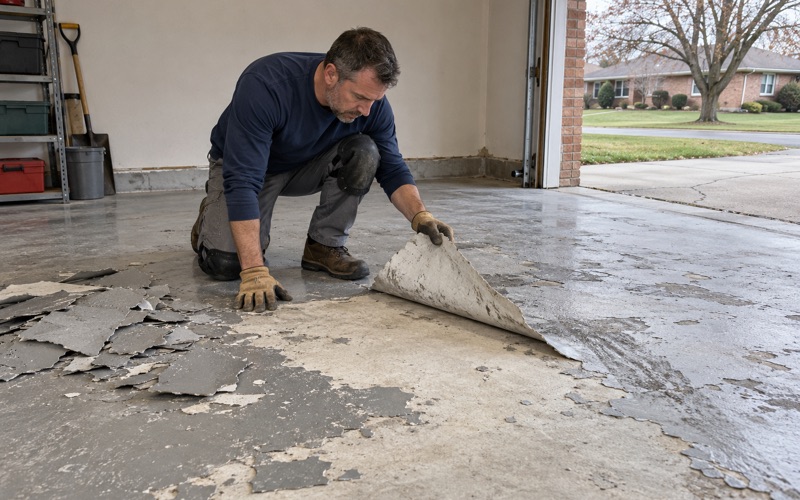
Oil that has soaked into bare concrete for a few seasons can keep a coating from bonding. Grinding opens the surface to an ICRI CSP profile suited to the system, and we judge whether the contamination is shallow enough to remove or whether that section needs more work first.
We also read the cracks, control joints and any earlier coating before pricing the job. When a slab needs repair, or in a bad case replacement, we say so before quoting a coating rather than covering the problem with color.
Curing in an Unheated Garage
Many attached garages are not heated, and a Wisconsin winter slab can sit too cold for a resin to cure properly. We schedule curing against slab temperature and the dew point spread at the surface, not against a calendar date.
There is a practical wrinkle on a Vista Run lot: the machines have to go somewhere while the floor cures, and the outdoor allowance is short. Planning the job for a window when some of the machines are already away, such as the boat during the summer, can make that easier, and if an unheated garage has to wait for spring, we tell you so.
What the Architectural Control Committee Reviews
A fair question for a Vista Run owner is whether a floor coating needs the subdivision’s sign-off. Section 2.1.2 requires Architectural Control Committee approval for construction, alteration, reconstruction, demolition, initial painting or exterior decoration, and a list of installations.
Exteriors, Not Interior Floors
Interior floor work is not on that list, and the declaration says nothing about floor coatings at all. Repairing or replacing approved exterior features with identical ones, or repainting an exterior the same color, needs no approval either.
So the committee does not choose your coating, and the covenants do not call for one. What the covenants do is decide what ends up parked on the floor, and that is what we design around. The declaration’s garage rules that do reach the street, such as a decorative door with glass inserts or carriage styling, sit outside our work.
Living Space, Home Businesses and Permits
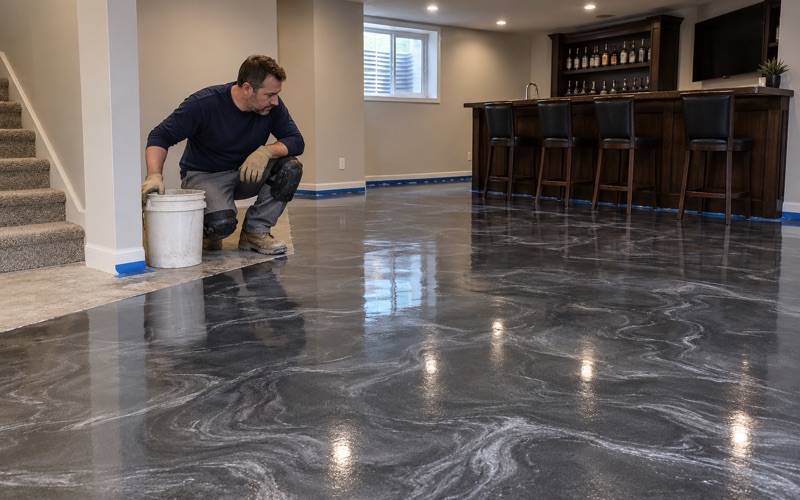
Section 6.1.1 says no garage may be used for living or sleeping without ACC approval, and a home business also needs that approval. If a garage project is drifting toward a guest room or a home business, that is a conversation for the committee before it is one for us.
Permits are a separate question from covenants. Before scheduling, we ask the Village of Sussex Building Inspection Department whether the job needs one, because coating an existing floor and finishing a space are not the same request.
Before Work Starts in Your Garage
Every home job gets a written contract before a deposit is taken, with the products and any warranty written into it. We will not present a coating as a cure for water rising through a slab or as radon reduction, because it is neither.
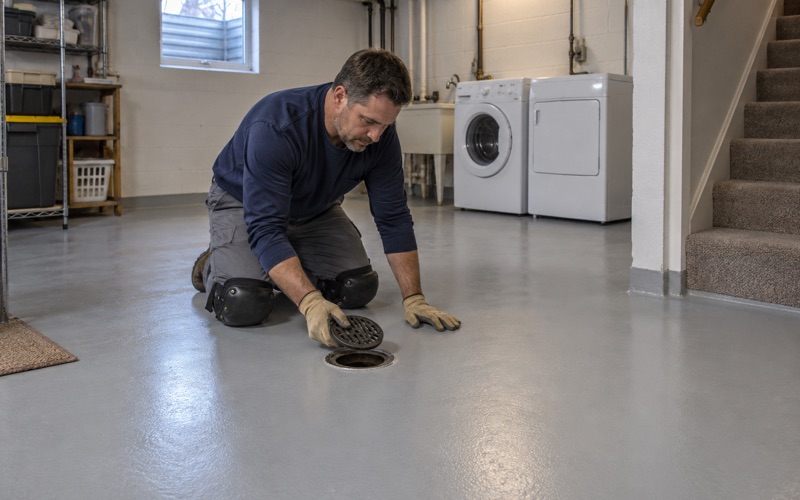
Grinding dust and slurry are collected on site and never washed into a floor drain or out to a storm sewer. Waukesha County sits partly inside the Milwaukee 2015 ozone nonattainment area, and 100% solids epoxy carries little solvent into an attached garage that shares air with the house.
- 20+ Years Experience
- Moisture Testing in Every Scope
- Written Proposals and Contracts