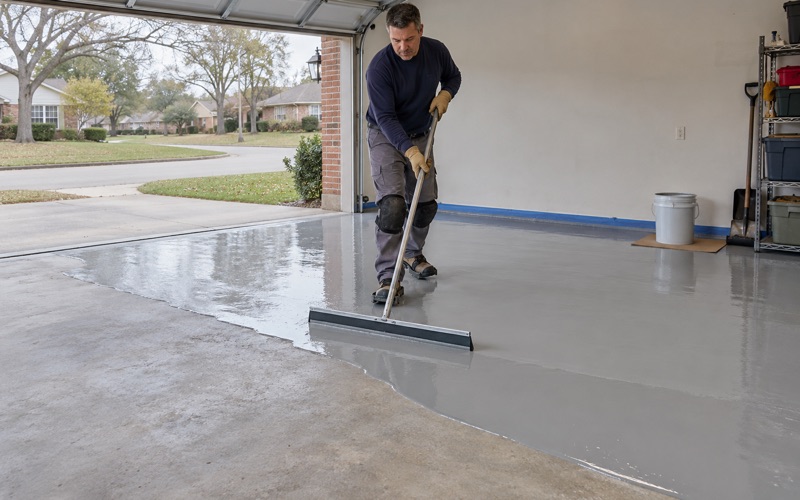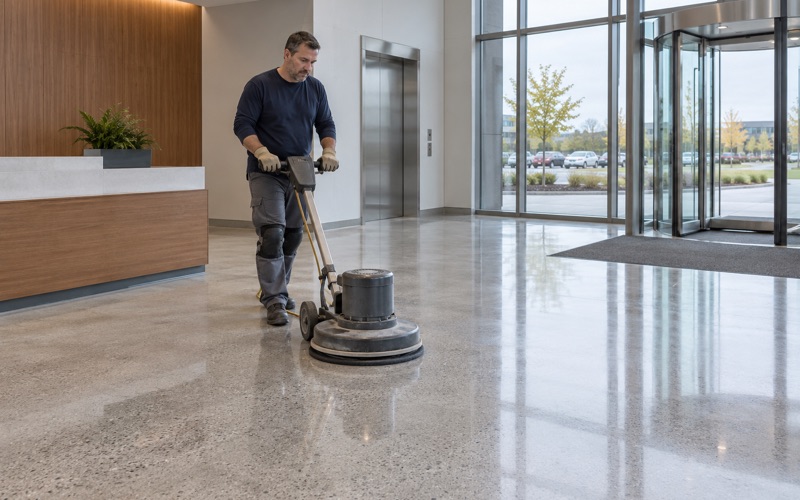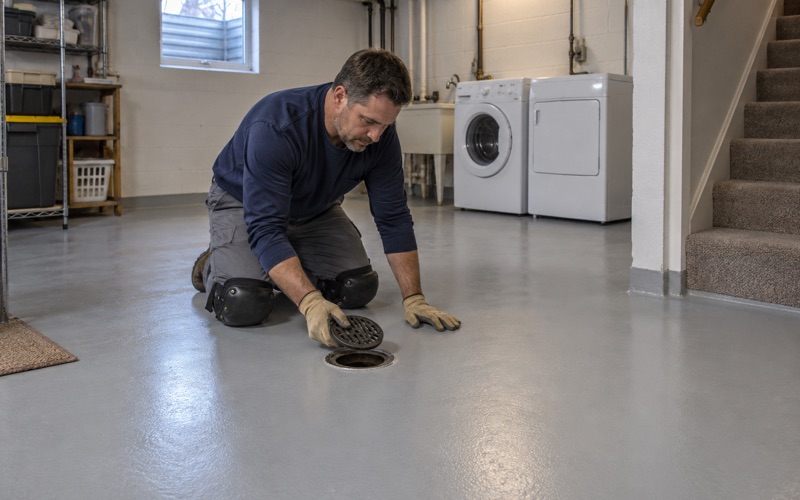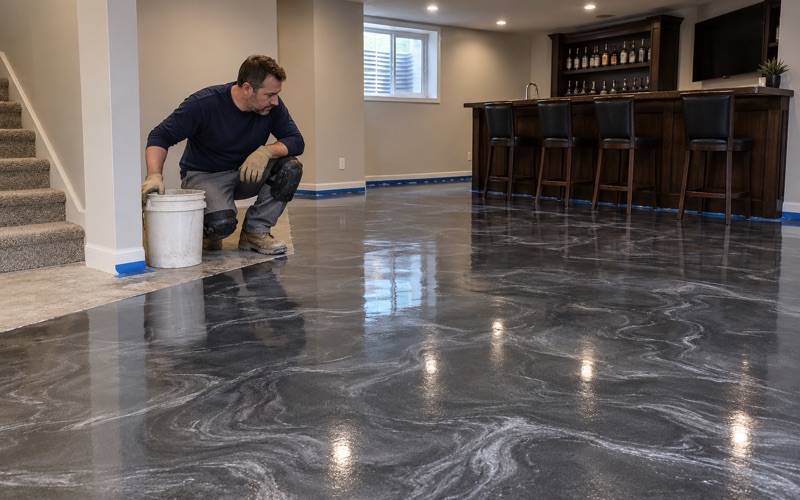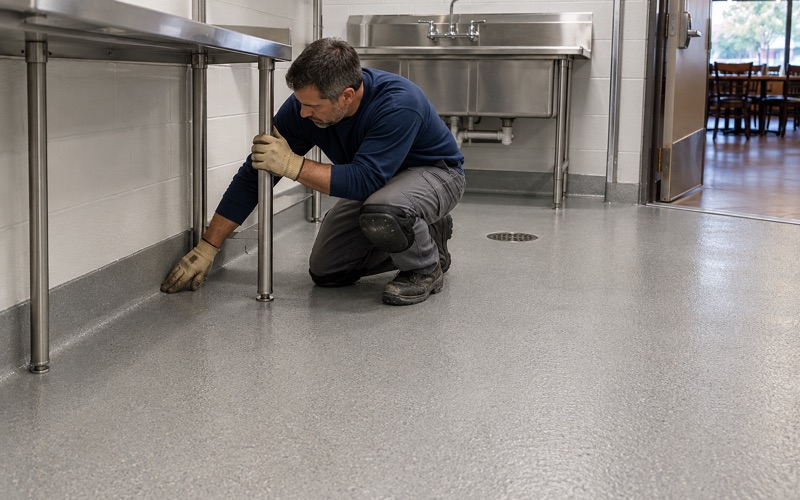
Brookfield Epoxy Flooring has spent more than 20 years on epoxy flooring in Milwaukee and across the county, and a growing share of the calls we take are about rooms where the floor protects something other than a car. Archives, gallery back rooms, private collections and storage vaults all sit on concrete, and that concrete matters more once irreplaceable objects are stored above it.
Those rooms ask three things of a floor. The slab has to stop shedding dust, the finish has to be hard enough for carts and shelving, and the coating has to be fully dry before anything sensitive comes through the door. Each of those is a specification and scheduling decision, not a color choice.
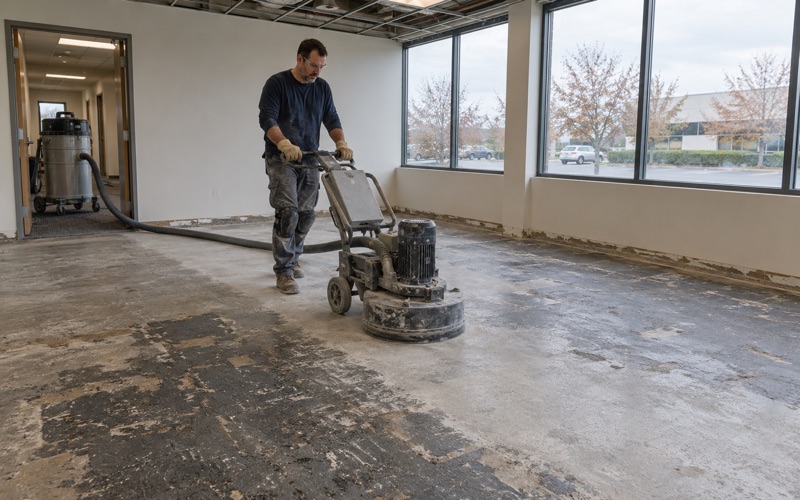
We open every slab with a diamond grinder or a shot blaster, never acid, and we put a moisture test into the written scope before we price the system. The proposal then names the product, the build and the finished thickness, so a registrar or facilities manager can check the floor that went down against the one that was quoted.
Four Million Objects Heading for Sixth and McKinley
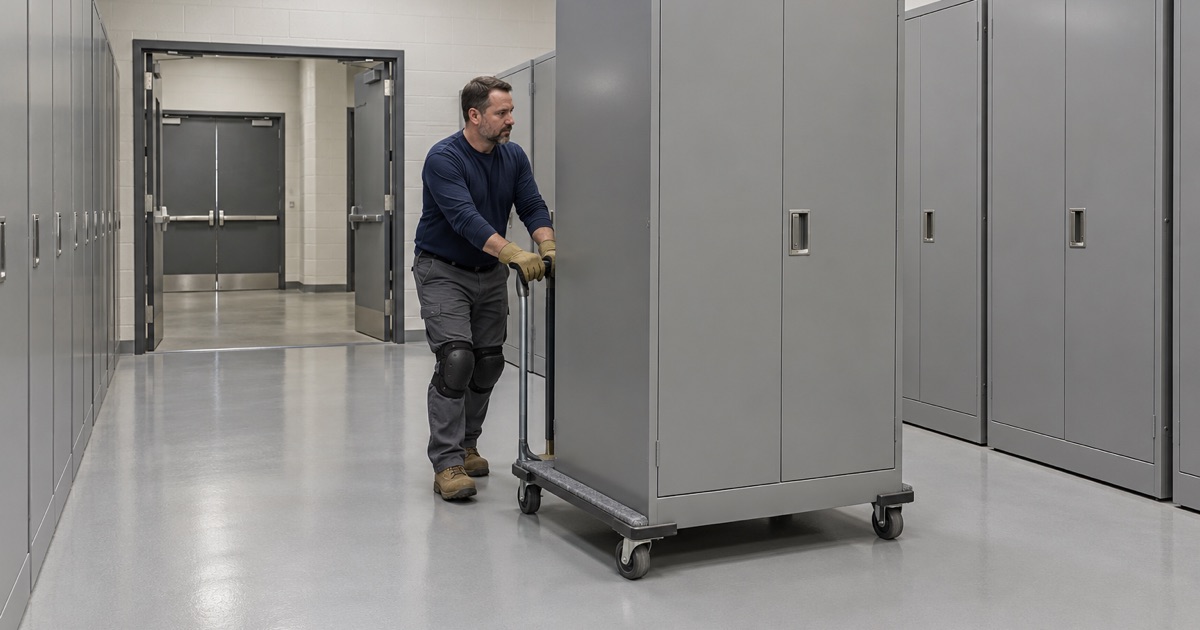
The biggest move in the city’s collecting world
The Milwaukee Public Museum is in the middle of moving about 4 million objects. Part of the collection goes into a new 200,000-square-foot, five-story building at the northeast corner of N. Sixth St. and W. McKinley Ave., at 1310 N. 6th St., and the museum sought a separate storage facility of roughly 50,000 square feet for about half of it. Only 6 to 8 percent of the collection is on display, so most of what moves is headed for storage rather than galleries.
For anyone who works with objects in Milwaukee, that move is a useful reference point. It turns the question of how a storage floor should be built into a public and visible one, with a published endpoint and a long list of rooms to fill.
The current building stays open through 2026 and closes to the public on January 3, 2027. The new building reopens in 2027 as the Nature & Culture Museum of Wisconsin, and its opening date has not been set.
Eight years of packing
Urban Milwaukee reported in 2023 that the work would likely take roughly eight years to inventory, pack, move and unpack, with everything expected to be moved by 2028. Staff began barcoding objects in 2021, the building has one freight elevator, and the insurer limits how much value can travel at one time.
A move paced like that depends on each room being ready when the next load is. A storage room whose floor finish is still drying is a room that cannot take its crates on schedule.
Any collection move, large or small, works the same way at room scale. A floor schedule that leaves a buffer between the last coat and the first delivery protects both the objects and the movers’ booking.
What we can and cannot say about the new building
We have not seen a floor specification, schedule or contractor for the new building, and nothing on this page describes its rooms. What we can describe is the published conservation guidance that collection facilities are designed against, and how it shapes floor work in any Milwaukee room that holds a collection.
The specific products, dates and contractors for that project are the institution’s business. We would not quote numbers or methods for a building we have not been asked to look at.
Looking for epoxy-flooring closer to Martin Drive? See Martin Drive Epoxy-Flooring.
Why Bare Concrete Fails a Collection Room
Abrasive alkaline dust from an unsealed slab
The Canadian Conservation Institute publishes design guidance for new heritage collection facilities, and its interior finishes section is direct: all exposed concrete surfaces must be sealed, because unsealed concrete generates a fine abrasive alkaline dust. That dust does not stay on the floor, since foot traffic and carts lift it toward shelving, boxes and object surfaces.
The guidance comes from a Canadian federal agency, not from a Wisconsin rule or a city ordinance, so no inspector will cite a bare slab. Collection managers follow it because it describes what actually harms objects over years of storage.
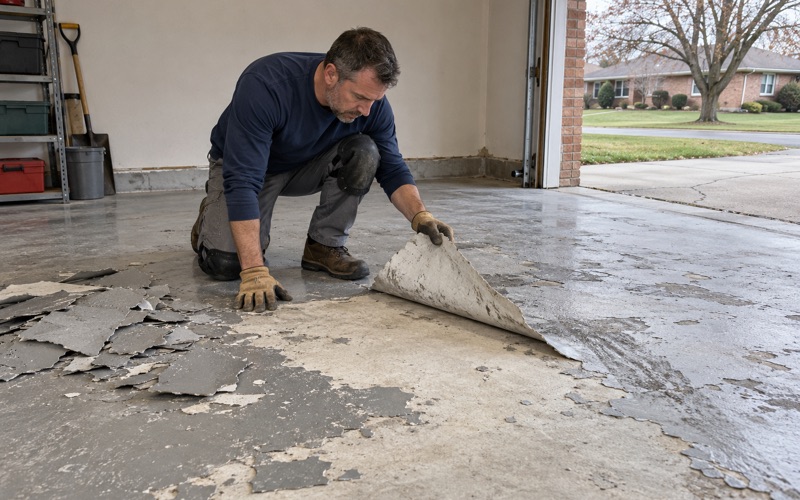
On a slab that has been bare for years, the surface may already be dusting when a broom crosses it. Grinding removes that weak top layer before any sealer goes down, so the new finish bonds to firm concrete rather than powder.
Sealed or painted, on the checklist
The same document carries a checklist for collection storage rooms, and one of its lines reads that exposed concrete surfaces are sealed or painted. The floor is an item to verify before a room is accepted, not a finish to pick at the end.
That changes when the floor conversation happens. We would rather be asked during planning, when sequencing is still flexible, than in the week shelving is due.
Grinding first, even for a sealer
A sealer or coating only stops dust if it bonds to sound concrete. We grind or shot blast to the profile the product calls for on the ICRI CSP scale, vacuum dust at the tool, and collect slurry on site rather than washing it into a floor drain.
Preparing a slab inside a building that already holds objects carries its own risk. That is why we talk through containment and room order with the facility before the first pass, not on the morning of the job.
Drying Time Before the First Crate Arrives
Four days for a room
CCI’s guidance sets a minimum drying time of four days for any acceptable interior finish before objects come into the room. Its storage-room checklist repeats the point with a line stating that the minimum four days of drying time is respected.
That makes the floor schedule something written backward from the move-in date. If crates are booked for a Monday, the last coat goes down early enough that four full days have passed by then, and we build the calendar that way from the proposal onward.
Four weeks inside airtight cases
The figure changes for airtight enclosures. For display cases and similar sealed housings, the same guidance sets a minimum drying time of four weeks, because whatever a fresh finish releases has nowhere to go.
We keep the two numbers separate on every schedule we write. A room floor runs on the shorter clock, and any finish sealed inside a closed enclosure runs on the longer one.
Cure follows the slab, not the calendar
Drying time only starts once a coating has gone down under the right conditions. We schedule cure against slab temperature and the dew point spread at the slab surface, and in a cold building that can move the start date, so we say so before anyone books movers.
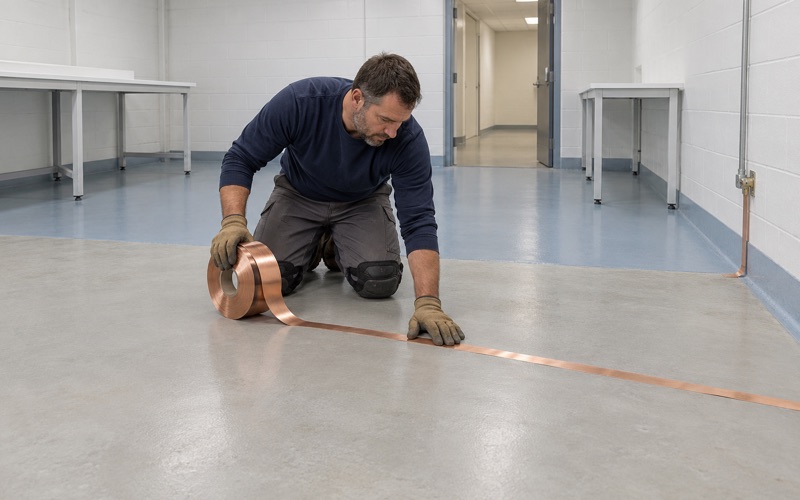
Moisture belongs in the same conversation. We test with ASTM F1869 calcium chloride kits or ASTM F2170 in-situ relative humidity probes before quoting, because a slab pushing vapor can blister a coating weeks after a room has been filled.
If a cold building has to wait for heat or drier conditions, we put the new date in writing. Coating anyway and hoping the cure catches up is how a schedule saves a week and costs a floor.
Amine blush, outgassing and pinholes
A rushed schedule shows up in the finish. Applying epoxy over a cold slab or into humid air invites amine blush, a waxy film that can interfere with the next coat, and a slab that outgasses during application leaves pinholes.
In a collection room those defects matter twice, because a blushed or pinholed surface is harder to clean and can trap the dust the coating was meant to stop. We would rather add a day to the plan than ask a registrar to accept a flawed floor.
Hard Resin, No Carpet, and Collection Storage Across Milwaukee
A harder resin underfoot
For floors, CCI’s materials table points to a harder resin such as acrylic-urethane. Rolling shelving, pallet jacks and object carts concentrate load on small wheels, and a soft finish scuffs and sheds under that traffic.
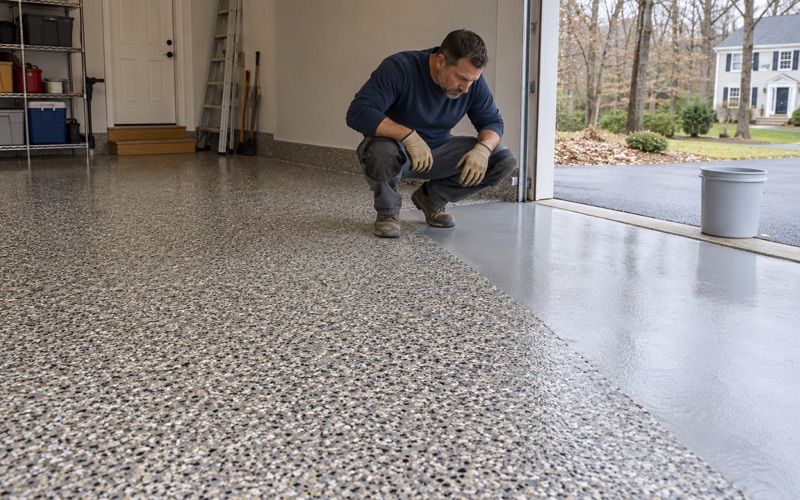
Within that direction we build systems such as 100% solids epoxy under a urethane or polyaspartic topcoat. The proposal names exactly what goes down and at what thickness, so the collection’s own records can carry it.
Where a room calls for a lighter option, a penetrating lithium silicate densifier hardens the surface of bare concrete. We explain how a densifier, a clear sealer and a full coating each compare against the sealed-or-painted line before anyone chooses.
Why carpet stays out
The same guidance says carpet is not recommended in collection spaces. Carpet holds dust, hides spills and is hard to keep clean around stored objects, which is the opposite of what a storage room needs.
A sealed or coated slab can be vacuumed and damp-mopped, and anything dropped on it is visible right away. That visibility is part of why hard floors suit rooms where staff inspect for pests and debris.
Archives, galleries and private collections
The guidance was written for heritage facilities, but the same logic applies to a university archive, a gallery storage room, a historical society’s back room or a private collector’s climate-controlled space anywhere in Milwaukee. Each one stores objects above a concrete slab, and each one is better served by a floor that does not shed dust and has finished drying before anything moves in.
Milwaukee is the county seat of Milwaukee County and the most populous city in Wisconsin, so collections here range from public institutions down to a single room in a private home. The floor questions stay the same at every scale.
A private collection room in a basement adds a moisture question a gallery upstairs may not have. Hydrostatic pressure under a basement slab can drive water vapor up through the concrete, which is why the moisture test comes before the coating choice, not after.
Joints, cracks and an honest scope
Before we quote, we read the slab’s cracks, joints and any old coating, and we say plainly when the concrete needs repair first. Storage and shop joints get a semirigid filler before coating, so cart wheels do not chip the edges.
We read out the warranty exclusions before the job is sold, moisture from below first, and we never present a floor coating as a cure for water coming up through a slab. We also ask the City of Milwaukee Department of Neighborhood Services whether the work needs a permit before it is scheduled.
Every home job gets a written contract before a deposit is taken, with the products and any warranty written into it. Commercial rooms get the same written scope, along with the drying window and the date the space can take objects.
- 20+ Years Experience
- Moisture Testing in Every Scope
- Written Proposals and Contracts