Brookfield Epoxy Flooring has spent more than 20 years on epoxy flooring in Menomonee Valley and across the Milwaukee area, and most of what we coat here carries weight: trucks, lifts, forklifts and carts. A heavy-vehicle floor fails differently from a basement floor. The coating usually gets blamed, but the slab underneath is often where the trouble started.
That is why our first visit is about the concrete rather than the color chart. We walk the cracks, the joints and any old coating, and we tell an owner plainly when part of a slab needs repair or replacement before anything can be applied over it. A coating laid over a broken slab only hides the break for a season.
On this page we explain how a shop floor sorts into two separate jobs, what federal workplace rules say about keeping a floor safe, and where our work starts and stops. If you manage a repair bay or a plant floor in the Valley, this is the order we would plan it in.
The City’s Fleet Shop on Canal Street
The Menomonee Valley is a U-shaped land formation along the southern bend of the Menomonee River, inside the City of Milwaukee. Its easy access to Lake Michigan and other waterways made it home to the city’s stockyards, rendering plants, shipping and other heavy industry, and it is still a working district today.
A centralized fleet in the Valley
City of Milwaukee Fleet Services is listed in the Menomonee Valley Partners directory at 2142 W. Canal St. According to Wisconsin Clean Cities, the city operates and repairs a centralized fleet of 3,024 pieces of rolling stock for departments such as the Library, the Health Department and the Police Department.
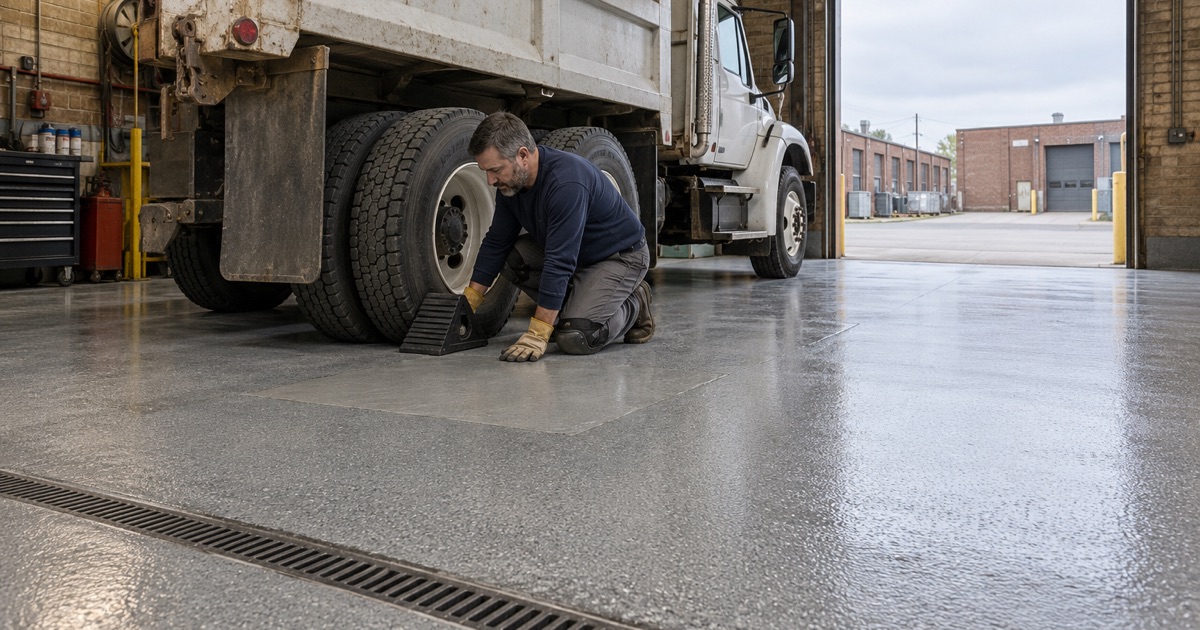
We mention it because it shows what Valley floors are built to carry. We have not seen the inside of that shop, and its floors, hours and practices are its own business. The point is the type of building: a heavy-vehicle repair floor takes concentrated wheel loads, jacks, dropped parts and fluids every working day.
Plant floors along Canal Street and Milwaukee Road
The Valley’s manufacturers share that kind of load. Charter Wire at 3700 W. Milwaukee Road added a 69,000-square-foot addition to its 160,000-square-foot plant in 2014. Ingeteam opened its facility at 3550 W. Canal St. in 2011 to make generators and converters for wind turbines and solar inverters.
Signicast opened its Milwaukee Finishing Complex, an investment casting facility at 1241 W. Canal St., in October 2022, and the Falk facility of Regal Rexnord sits at 3001 W. Canal St. Each of these is a different floor problem, but all of them start with the same question about the slab.
What we read before we quote
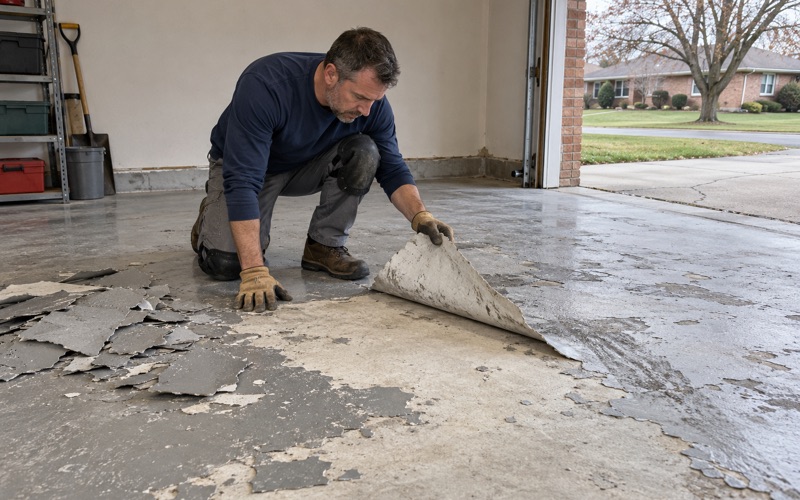
We look for spalled edges, broken corners at joints, cracks that move, and old coating that has lifted or worn through to bare concrete. Each defect gets sorted into a slab problem or a surface problem before we price anything.
That sorting is the most useful thing we hand an owner. It tells them which work belongs with a qualified person on the structure and which work belongs with us on the finish.
Looking for epoxy-flooring closer to Greendale? See Epoxy-Flooring Services in Greendale.
OSHA’s Inspect-and-Repair Rule for Floors
The federal walking-working surfaces rule, 29 CFR 1910.22, applies to places of employment, including shop and plant floors. It does not mention coatings at all. What it does is set out a duty to keep floors safe, and that duty shapes how a repair bay should plan any floor project.
Inspect regularly and as necessary
Under 29 CFR 1910.22(d)(1), walking-working surfaces are inspected, regularly and as necessary, and maintained in a safe condition. In a heavy-vehicle shop, that means somebody is looking at the floor on a schedule, not only after a worker trips.
Regular inspection is also when a coating problem tends to surface. Peeling at a joint, a worn travel lane or a crack showing through the finish is often the first visible sign that the slab beneath has started to move.
Fix it or guard it before anyone walks it again
Section (d)(2) is direct: a hazardous condition is corrected or repaired before an employee uses the surface again. If the repair cannot be made right away, the hazard must be guarded so employees cannot use that surface until it is fixed.
For a busy repair bay, that can mean a stretch of floor taped or barricaded off while a repair is scheduled. We plan our work around that reality, sequencing bays so a shop keeps some floor in service, including overnight and weekend windows where the building allows it.
Corrosion, leaks and spills
Section (a)(3) names corrosion, leaks and spills among the hazards a surface must be kept free of, alongside sharp or protruding objects, loose boards, snow and ice. Section (a)(2) adds that workroom floors are kept clean and, to the extent feasible, dry.
A sealed, continuous floor is easier to clean than bare, open concrete, which is one reason shops coat in the first place. That is a housekeeping benefit, not a compliance credential, and we never describe a coating as OSHA-approved.
Structural Slab Repair Versus Surface Coating
The rule’s next sentence is the one that splits a damaged floor into two jobs. Under 29 CFR 1910.22(d)(3), when any correction or repair involves the structural integrity of the walking-working surface, a qualified person performs or supervises it.
A qualified person on the structural half
A broken slab, a deeply spalled area under wheel traffic or a section that has settled is a question about the floor’s structure. Section (b) separately says each surface must support its maximum intended load, and a heavy-vehicle floor carries a great deal of it.
That work belongs under a qualified person who performs or supervises the repair. When we find a slab in that condition, we say so in writing and leave the structural decision with the owner and the person they bring in, rather than quoting a coating over it.
A coating is only as good as the slab under it
A coating is surface work, and it is not a structural repair. It adds wear resistance, chemical resistance and a cleanable face, but it bonds to whatever is beneath it and moves when that concrete moves.
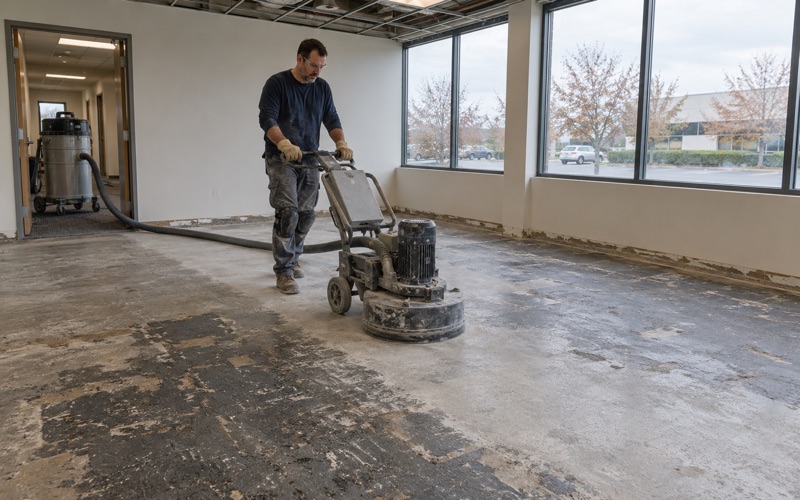
Once the slab has been repaired and has cured, we open the surface mechanically with diamond grinding or shot blasting to a profile on the ICRI CSP scale. We never acid etch, because a shop floor needs a clean, sound profile the coating can grip.
Joints, edges and heavy wheels
Sawcut and construction joints are where heavy wheels break edges first. Before any coating goes over them, we fill shop and warehouse joints with a semirigid joint filler so cart, jack and lift wheels roll across rather than chip the joint shoulders.
For the coating itself, a heavy-traffic floor usually takes a 100% solids epoxy build, sometimes with a quartz aggregate broadcast for texture and a polyaspartic or urethane topcoat. Where hot liquids or harsh cleaners are part of the day, urethane cement is worth discussing instead.
Moisture and curing before the first coat
We test for moisture as a line item in every scope, using ASTM F1869 calcium chloride testing or ASTM F2170 in-situ relative humidity probes. A slab that looks dry can still push vapor up into a fresh coating and cause blisters, outgassing or pinholes.
Curing is scheduled against slab temperature and the dew point spread at the surface, not the calendar. If a bay is too cold or too damp to cure properly, we say so and plan around it rather than coat and hope.
Valley Shop and Plant Floor Questions
These are the questions shop managers and plant engineers in the Valley tend to ask before a floor project, along with how we answer them. Most come back to the slab before the finish.
Does a coating make a floor compliant?
No. 29 CFR 1910.22 does not mention coatings, and a coating does not count as a structural repair under any reading of it. What a well-built coating can do is give a sound, repaired slab a durable surface that is easier to keep clean and dry.
The inspection, repair and guarding duties stay with the employer. Our job is to make sure the finish we install does not hide a structural problem that should have been repaired first.
What does the proposal show?
Our proposal names the product, the system build and the finished thickness, so a facilities manager can check what was quoted against what went down. It also separates any slab repair the owner needs to arrange from the coating work we are pricing.
Warranty exclusions are read out before the job is sold, with moisture from below named first. A shop manager should know exactly what the warranty covers before committing a single bay.
Can the shop keep running during the work?
Usually, in part. We phase a shop bay by bay, guarding off the area under work so it is not used until it is ready, and we can schedule overnight and weekend windows when the building allows.
Grinding dust and slurry are collected on site and are never washed down a floor opening or into a storm sewer. That keeps the work area clean and keeps our waste out of the shop’s water.
What if only one lane is failing?
A single worn travel lane is common in a repair bay, and it is often a sign of where loads concentrate. We check whether the slab beneath that lane is sound before suggesting a patch or a full recoat.
If the concrete is intact, a localized repair to the coating may be enough. If the slab has broken under that lane, the structural repair comes first, and the coating follows once it is done.
- 20+ Years Experience
- Moisture Testing in Every Scope
- Written Proposals and Contracts