Brookfield Epoxy Flooring has spent more than 20 years on epoxy flooring in Martin Drive and across the Milwaukee area, and the floors we think hardest about here are the ones that have to show dirt rather than hide it. A grain room, a mill corner or a basement woodshop throws off fine dust that settles everywhere. The slab under it decides whether that dust gets vacuumed up or ground into the concrete.
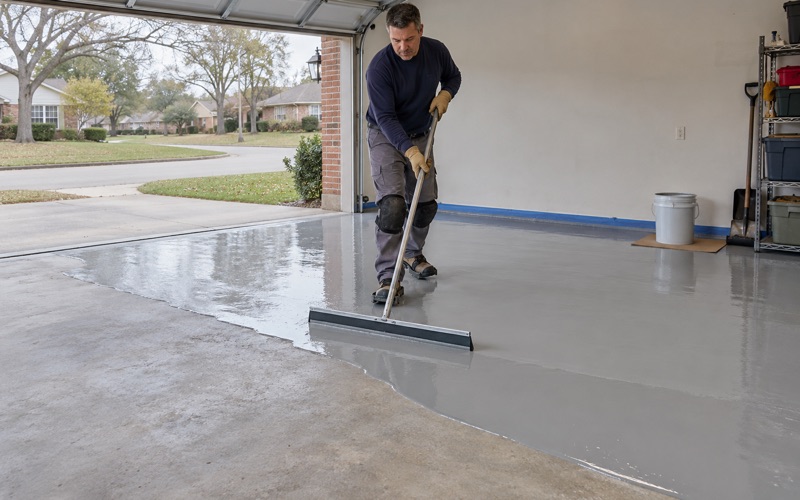
Our work starts below the coating. We open every slab with a diamond grinder or a shot blaster, never acid, so the primer bonds into sound concrete instead of a weak, powdery top skin. Before a price goes out we look over the cracks, joints and any old coating, and we tell you plainly if the slab needs repair first.
The proposal you get names the product, how the system is built and its finished thickness. That makes it something you can hold up against the floor once it is down, not a promise you have to take on faith.
A Grain-to-Glass Distillery Moves to Juneau Avenue
Central Standard on the Harley-Davidson Campus
Central Standard announced in June 2025 that it is relocating its main distilling operation into a refurbished 73,000-square-foot section of the historic Harley-Davidson campus along Juneau Avenue. The plan puts production, bottling, barreling, barrel aging, tours, a tasting room and private events under one roof, consolidating three Milwaukee-area facilities. Bottling and barreling capacity is set to grow 20 times, and Harley-Davidson keeps operating on the site.
The address, 3700 W. Juneau Ave., falls inside the City of Milwaukee, and OpenStreetMap places it in the Martin Drive quarter, just west of Davidson Park. BizTimes ran a media first look in April 2026, about six months ahead of opening. An opening date has not been confirmed.
Wisconsin Grain, Milled In-House
Central Standard describes itself as a grain-to-glass distiller. Since 2023 it has sourced the grain for its bourbon, whiskey, vodka and gin through Wisconsin-based DeLong Co.’s Grown Climate Smart program, and launch coverage named rye, wheat, corn and oats. Grain to glass means that grain is milled, mashed and distilled in-house.
We have not seen the mill room in the new building, and nothing on this page describes its dust controls or its floors. What we can describe is what grain milling does to any floor beneath it, which is the part of the story a coating contractor can speak to.
Why Mill Dust Ends Up on the Floor
A mill breaks whole kernels into grist, and the finest fraction hangs in the air before it drifts down. It lands on ledges, pipe runs and equipment, and the largest flat surface in the room, the floor, collects the most. Every sack emptied into a hopper adds to it.
Flour and grain dust are fine and dry, so they ride on shoes and cart wheels into the rooms next door. A layer nobody notices in the mill becomes a film across a hallway, which is why the floor is the first place to watch.
Looking for epoxy-flooring closer to Greenfield? See Epoxy-Flooring in Greenfield.
What OSHA’s Combustible-Dust Program Looks For
Organic and Food Dusts Are Covered
OSHA’s Revised Combustible Dust National Emphasis Program, instruction CPL 03-00-008, took effect January 30, 2023. It covers organic dusts such as sugar, flour and paper, along with human and animal food dusts, and it names agriculture and food products among the industries in scope. Grain processing that falls outside OSHA’s separate grain-handling standard can also come under it.
That reaches any building that mills its own grain, from a distillery to a small food producer. The program is about where dust builds up and how it gets removed, so the floor is part of the conversation from the start.
Floors Are on the Inspector’s List
The instruction lists the places dust is likely to accumulate: horizontal structural members, conduit and pipe racks, cable trays, areas above suspended ceilings, on and around equipment, and floors. A floor that looks clean from the doorway can still carry a settled layer along the walls and under machinery.
None of this means OSHA has looked at anyone on Juneau Avenue, and we are not suggesting it has. It means a floor in a grain-handling room is something inspectors are told to check, and an owner is better served by a surface that makes the answer obvious.
Vacuum, Sweep or Wash Down
The program accepts removal of accumulated dust by vacuum cleaning, sweeping and water wash-down. Compressed air and other high-energy methods are allowed only with appropriate safeguards in place and the pressure held under 30 psi, because blowing dust off a surface puts it back into the air.
OSHA names cleanup methods, not a floor product, and the program does not call for any coating. Where a coating helps is in making the accepted methods work: a floor that can be vacuumed clean or washed down without damage is a floor a crew will actually clean the approved way.
Floors That Show Dust and Let It Be Vacuumed
Smooth and Sealed Beats Rough and Porous
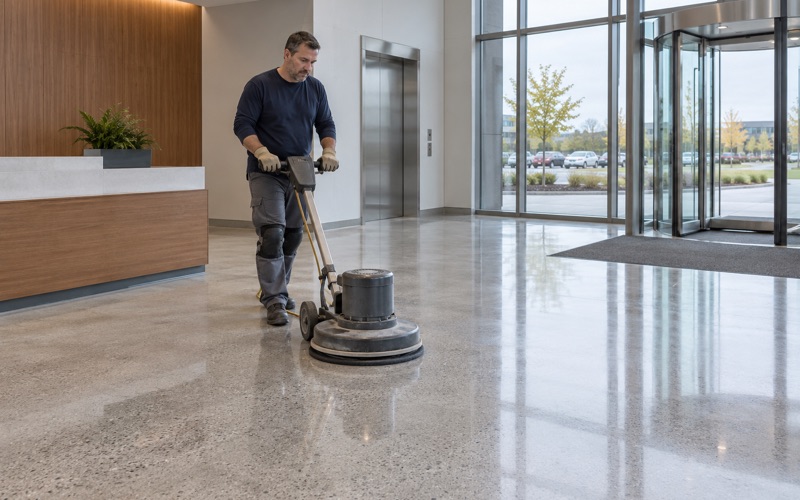
Bare concrete is porous, and an old broom finish or a worn, pitted slab has texture that holds fine dust. A vacuum skims over it and leaves residue in every pore, and a broom lifts a cloud. A sealed, smooth floor gives that dust nothing to lodge in.
For a grain room we usually look at a 100% solids epoxy over a ground slab, or a urethane cement system where the room is washed down often. Both cure to a closed surface that a vacuum head clears in one pass and a hose rinses without the water soaking into the concrete.
Light Color Shows a Settling Layer Early
A light gray or tan floor shows a thin film of flour or grist long before it builds up. On dark or mottled concrete the same layer blends in until someone drags a finger through it. A light, solid color turns the floor into a gauge the whole crew can read at a glance.
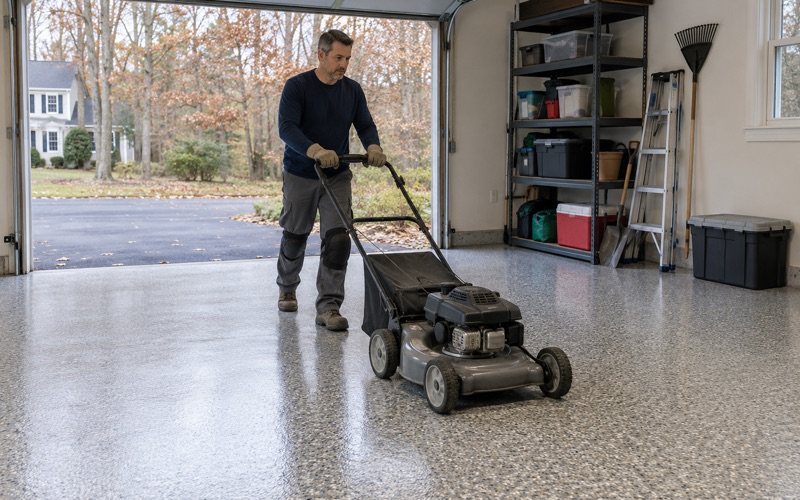
That is also why we steer grain rooms away from dense flake blends. A heavy vinyl flake broadcast hides dirt, which is a selling point in a garage and the wrong trait in a mill room, where the whole point is to see what has settled.
Joints, Edges and Coving
Dust collects where the floor stops being flat: saw-cut joints, cracks and the line where floor meets wall. We fill control joints with a semirigid filler before the coating goes over them, so carts do not chip the edges and open a fresh groove for dust to pack into. Cracks get read and repaired first, and if a slab is too far gone we say so.
A coved base, where the coating curves a few inches up the wall, removes the corner that brooms and vacuum heads miss. It is common in food rooms for the same reason it helps here: there is no square inside corner left to hold debris.
Sealed Concrete for Grain Rooms, Shops and Home Workshops
Prep That Keeps the Coating On
A dust-control floor only works while it stays bonded. We grind or shot-blast every slab to an ICRI surface profile matched to the system, and we do not acid etch. Grinding dust and slurry are collected on site, never washed into a floor drain or a storm sewer.
Moisture comes next. We test with ASTM F2170 in-situ relative humidity probes or ASTM F1869 calcium chloride tests as a line item in the scope, because a slab pushing vapor will lift a coating however clean it was when it went down.
Workshops in Older Martin Drive Houses
The Martin Drive neighborhood on Milwaukee’s west side was built up from the late 1910s, and housing development started in the 1920s around two breweries. It is a district of frame single-family homes and duplexes, bordered roughly by Vliet Street, 35th Street and WIS 175, with Washington Park just to the north. The street was renamed in 1926 for Morgan Lewis Martin, a 19th-century local politician.
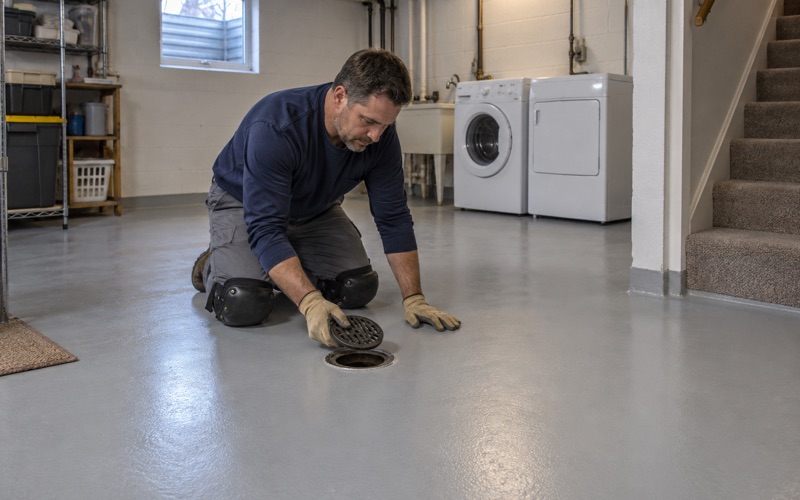
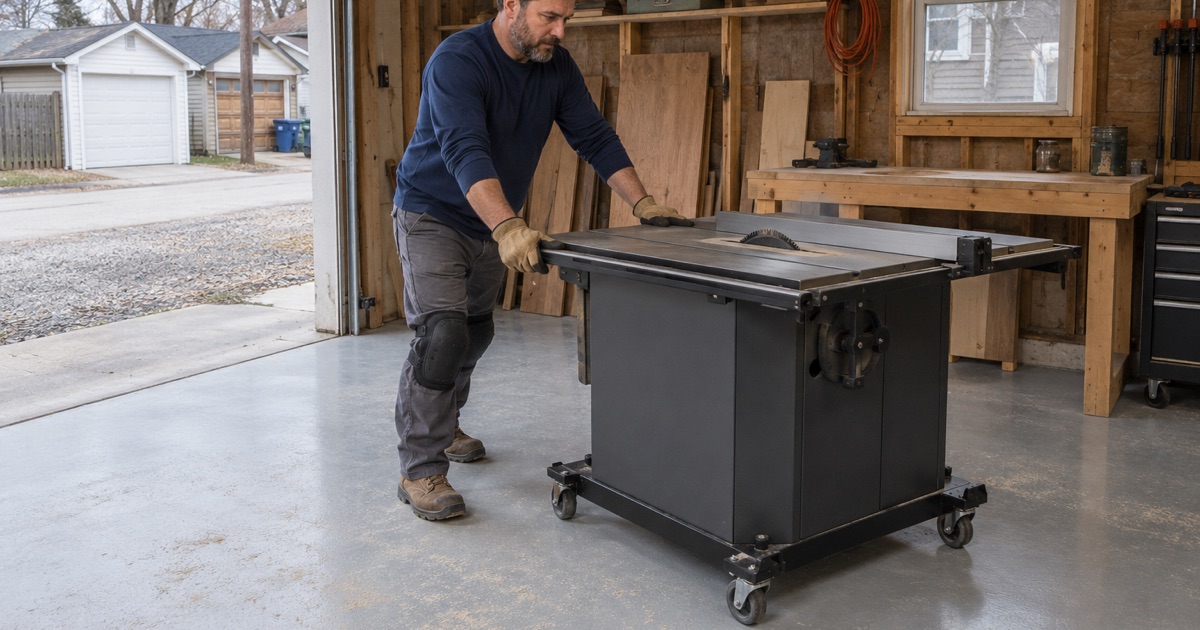
Basements and garages in houses of that age often hold a woodshop, and sanding and sawing make the same kind of fine, dry dust a mill does on a smaller scale. A sealed, light-colored floor lets a shop vacuum pick it up instead of tracking it upstairs. Older basement slabs are where moisture testing matters most, and we will not sell a coating as a fix for water coming up through the slab.
Permits and Who Signs Off
Martin Drive is part of the City of Milwaukee, so building and trade permits run through the Department of Neighborhood Services and its Permit & Development Center. We ask whether a job needs a permit before it is scheduled, since finishing a basement and coating its floor are separate questions.
Warranty exclusions are read out before anything is signed, with moisture from below named first. Home jobs get a written contract before any deposit is taken, with the products and the warranty written into it.
Scheduling the Cure
We schedule curing against slab temperature and the dew point at the surface, not the calendar. An unheated garage in a Milwaukee winter may have to wait for spring, and we would rather tell you that up front than watch a coating blush or fail to cure.
A working shop or production room does not have to shut down for the whole job. We can coat it in sections, including overnight and weekend windows, around the hours it has to keep running.
- 20+ Years Experience
- Moisture Testing in Every Scope
- Written Proposals and Contracts