Brookfield Epoxy Flooring has spent more than 20 years on epoxy flooring in Fox Point, and the floors that teach us the most are the ones that look clean but are not. A basement slab can keep a dark patch where an old fuel-oil tank sat long after the tank itself is gone, and a coating laid over it will let go there first. We plan for that patch before we plan anything else.
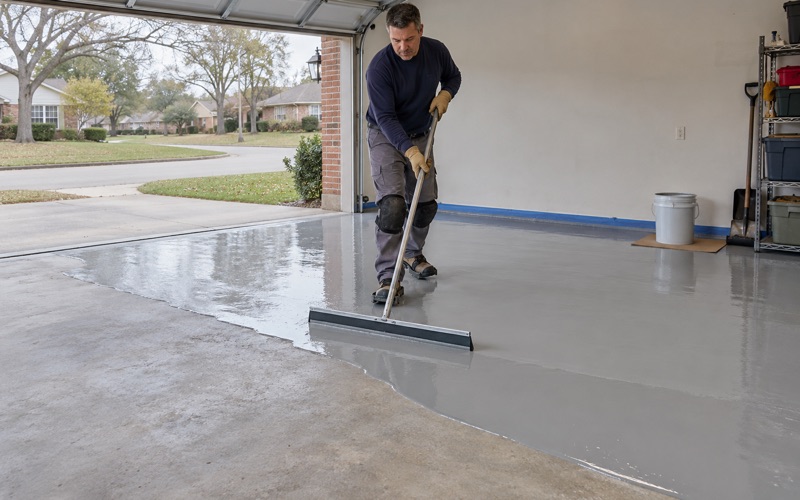
Every floor we take on is opened with a diamond grinder or a shot blaster, never an acid etch, and the proposal spells out the product, the system build and the finished thickness. That way the floor that goes down can be checked line by line against the floor that was quoted. Moisture testing sits in the scope from the start, whether the slab is under a basement rec room or a two-car garage.
This page is about the condition that changes our prep most on older homes in the village: concrete that has soaked up heating oil. If your slab carries a stain like that, we tell you what it will take before anything is signed, and we say so plainly if the stained section has to be cut out first.
Where the Old Fuel-Oil Tank Stood
Fox Point is a village in Milwaukee County, and its houses lean hard toward one era. Of the 2,835 housing units the Census counts, 1,021 were built in the 1950s, about 36 percent, and 94 percent of owner-occupied homes are single-family detached houses. Nobody has counted how many of those houses once burned heating oil, so we never assume either way and read the slab itself.
What the Village Permit Forms Show
The village’s own paperwork shows that oil tanks are still part of the local building picture. The 01/26 revision of Fox Point’s building permit application carries a fee line for fuel tanks at $25.00 per 1,000 gallons. The Building Permit and Engineering Checklist lists Underground Storage Tank (UST) Removal among the other permits a project can need.
Tank work and tank removal are environmental and permitting matters outside a floor coating, and we do not take them on. What matters to us is what the tank left behind: the slab it stood on, and the path a supply line took across the floor. Questions about tank permits belong with Village of Fox Point Building Inspection at Village Hall, 7200 N. Santa Monica Blvd.
Reading the Floor Before We Quote
We walk the basement and garage before any number goes on paper, and we look for the signs of a former tank. Bolt holes or a cut-off pipe stub near a foundation wall, a rectangle of darker concrete, or a line of staining running toward the wall all tell us where oil may have reached the slab. We read cracks, joints and any old coating on the same visit.
A stain that feels slick, smells of fuel or darkens again after a wipe is a stain still holding oil. We mark it on the drawing, and it gets its own line in the proposal rather than being folded into general cleaning.
Supply Lines Across the Slab
A tank is not the only source. Where a supply line once ran across the floor to a burner, a narrow band of concrete along its route can hold oil from small leaks at fittings, and that band is easy to miss once the pipe is gone.
We trace those routes from the wall penetration to the old burner location and treat the band the same way as the main stain. A coating that fails along a straight line across a basement floor is often a coating that was laid over a forgotten supply line.
Looking for epoxy-flooring closer to Menomonee Valley? See Epoxy-Flooring in Menomonee Valley.
Why Oil-Soaked Concrete Will Not Hold a Coating
Concrete is porous, and oil that sits on it for years does not stay on top. It wicks down into the pores and capillaries of the slab, where a mop or a scrub brush cannot reach it. An oil-soaked patch can look dry and dull on the surface while the concrete a short way down is still saturated.
An old stain is also bigger than it looks. Years of exposure let it work deeper and spread wider under the surface than the visible stain suggests, so the area we treat is larger than the mark on the floor.
What Happens to the Bond
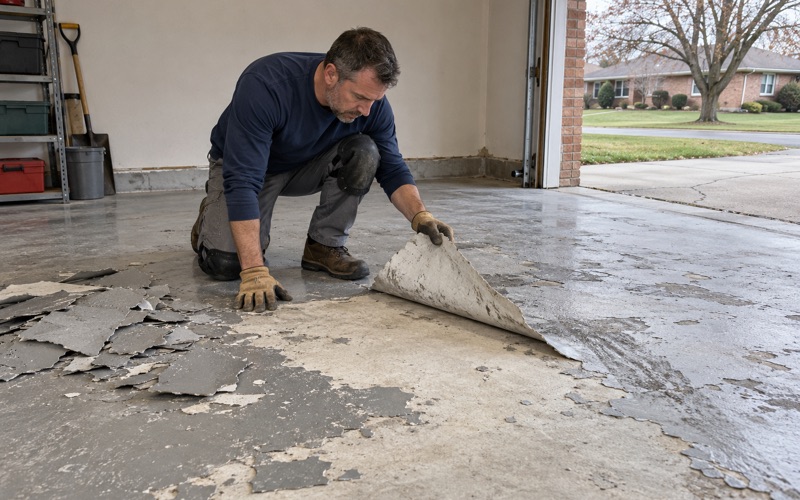
An epoxy primer works by soaking into clean, open concrete and locking onto it. Oil in the pores fills the space the primer needs and leaves a film the resin cannot grip, so the coating sits on the oil instead of on the slab. That is how a floor ends up peeling in one rectangle while the rest of the basement holds.
Oil coming back up through fresh resin can also show as fisheyes, soft spots or a ring of discoloration around the old stain. None of those can be fixed from the top once the floor has cured; the section has to be ground off and done again.
Why Cleaning Alone Is Not Enough
ASTM D4258, the standard practice for surface cleaning concrete for coating, covers removing grease, dirt and loose material by broom, vacuum, water, detergent or steam. It also says that cleaning does not change the surface profile, and that it should not be used alone where a coating needs optimum bond. For that, it points to D4259 for abrading and D4260 for acid etching.
We follow the abrading side of that. A residential floor coating has to stay bonded under car tires, dropped tools and seasonal temperature swings, so a detergent wash is the first step of our prep and never the last one.
Degreasing, Testing and Profiling the Stain
A stain that we judge recoverable goes through a fixed sequence, and each step has to pass before the next one starts. The sequence matters more than any single product, because skipping a step is how a clean-looking spot fails after the floor is finished.
Degreasing the Slab
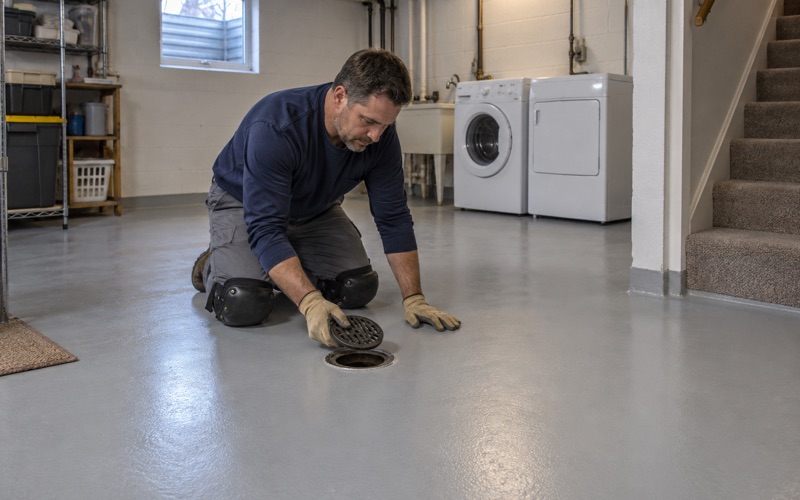
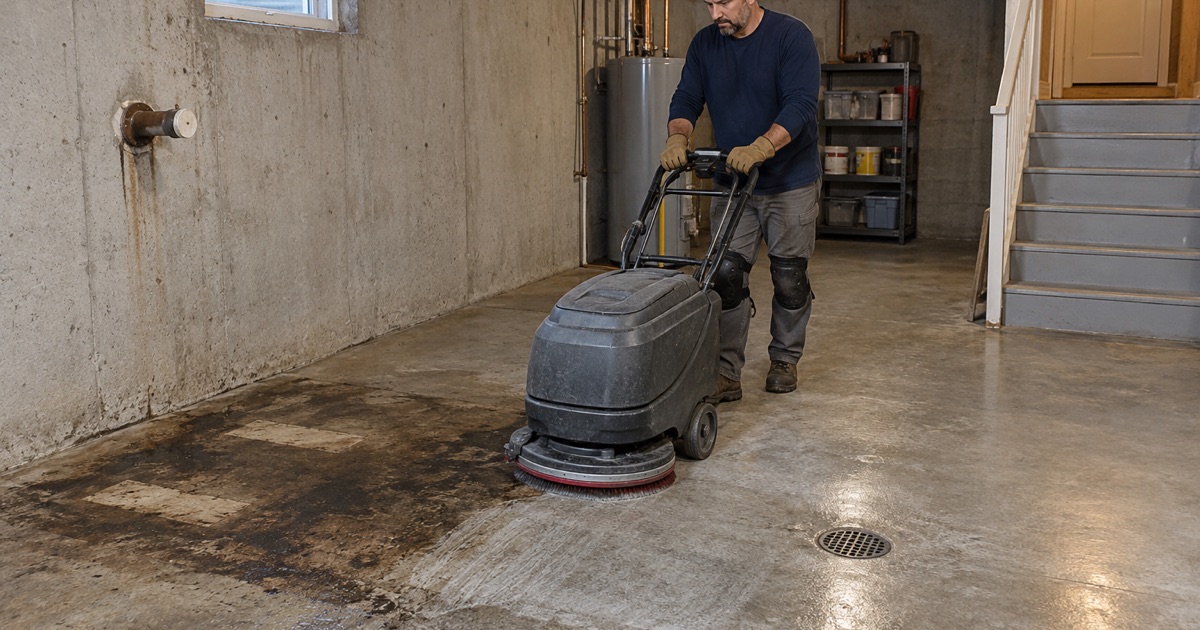
We degrease the stained area with a concrete degreaser and hot water, working it into the surface and pulling the dirty solution off with a wet vacuum rather than letting it run toward a floor drain. Heavier stains take several rounds, and some need a poultice left to draw oil up out of the pores before it is scraped and collected. The rinse water and residue are bagged or drummed and leave with us.
Testing Whether the Oil Is Gone
After the area dries, we check it the simple way first: a few drops of water should soak in and darken the concrete, not bead up on top. We also watch whether the stain bleeds back to the surface as the slab sits overnight, since oil deeper down tends to migrate up once the top has been cleaned.
A spot that keeps beading or bleeding gets another round of degreasing, and if it still will not pass, we stop and talk about cutting it out. Moisture testing runs on the same visit, because a basement slab can be wet from below as well as oily from above.
Profiling for Bond
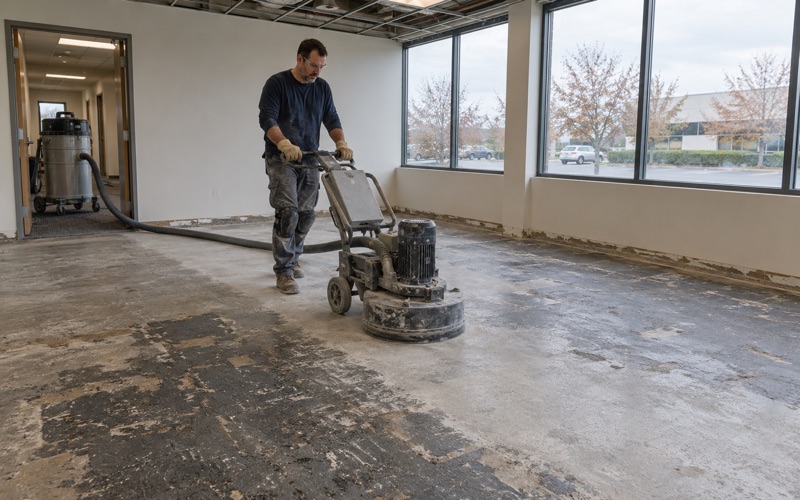
Once the area passes, the whole floor is opened with a diamond grinder or shot blaster to a surface profile the primer can key into, measured against the ICRI CSP scale. Grinding takes off the top layer that held the most oil and exposes fresh concrete, which is why we profile after degreasing rather than before. We check the stained area once more after grinding, because fresh concrete underneath can show oil the surface hid.
Cutting Out Bad Concrete and Coating Fox Point Floors
When the Stained Section Is Cut Out
Some oil-soaked concrete never passes, usually where a tank leaked for a long time or a line dripped in one spot. In that case we say so before the job is sold: the section is saw-cut, broken out, and replaced with new concrete or a repair mortar, and the coating waits until the patch has cured and tests dry.
Breaking out a slab where a tank once stood can turn up soil questions that belong to an environmental professional, not a flooring crew. If that happens, we stop at the concrete and leave the soil to them. The cut-out patch is then ground and profiled with the rest of the floor so the coating reads as one surface.
Basements and Permits
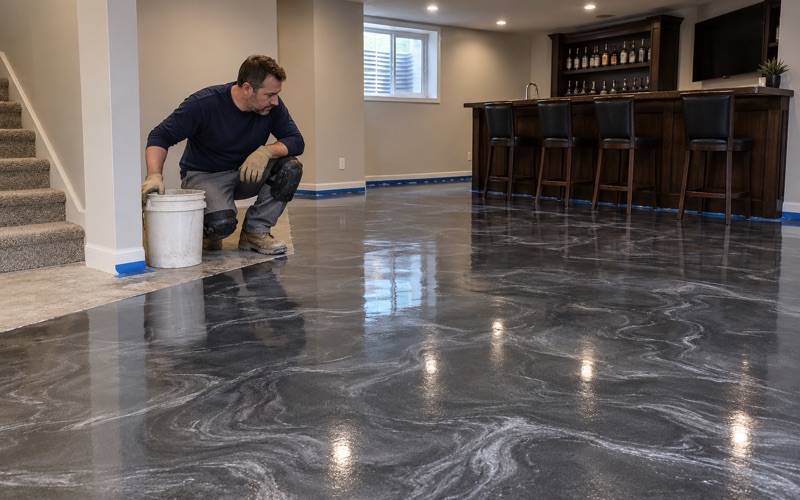
Coating a basement floor is a finish, and finishing a basement is a different question. Fox Point asks for floor plans and structural details on interior remodels, so when a floor is part of a larger remodel, we ask the village inspector whether the work needs a permit before we put it on the schedule.
We also do not sell a coating as a fix for water coming up through a slab or as radon reduction. If moisture testing shows a basement slab is wet from below, the warranty exclusions for moisture are read out first, before any price is agreed.
Fox Point Garage Floors
The garage gets the same stain check as the basement, because drips from a car or a leaking gas can leave oil in the pores just as a tank does. Wisconsin does not require a vapor retarder under an unconditioned attached garage slab, so we test that slab rather than trust a dry look.
Winter road salt and calcium chloride brine come in on the tires, so the system we build for a garage is chosen to stand up to deicers. In an unheated garage, curing is set by slab temperature and dew point, and sometimes that means waiting for spring. A new detached garage is a separate matter for the Building Board, which reviews it from its own dimensioned plan.
What Goes in Writing
Every home job gets a written contract before we take a deposit. For a Fox Point floor with a tank stain, that contract names the degreasing and testing, any cut-out repair, the moisture test, the product and the system build, so each step can be checked against what was done. The warranty terms go into the same document.
- 20+ Years Experience
- Moisture Testing in Every Scope
- Written Proposals and Contracts