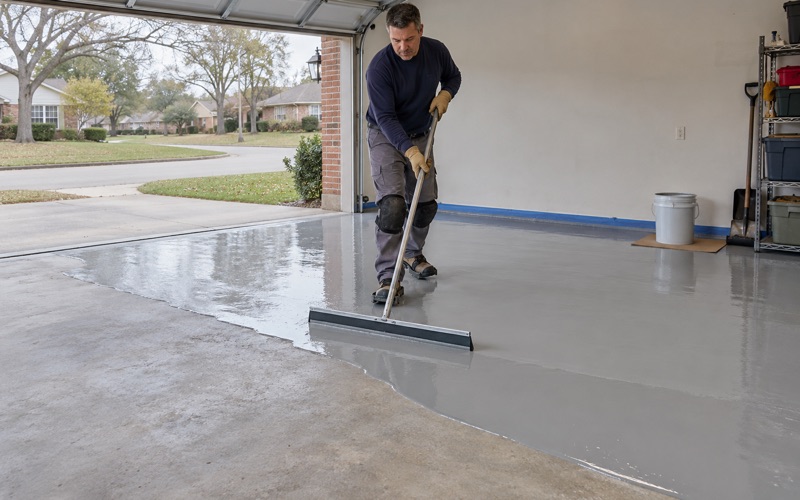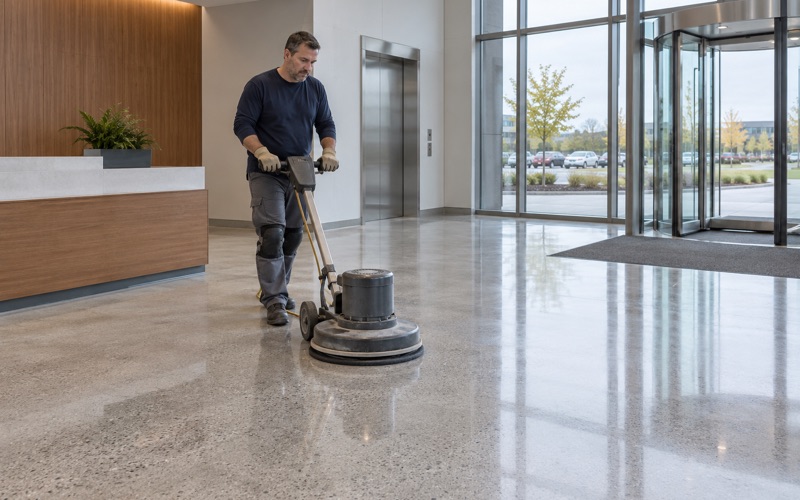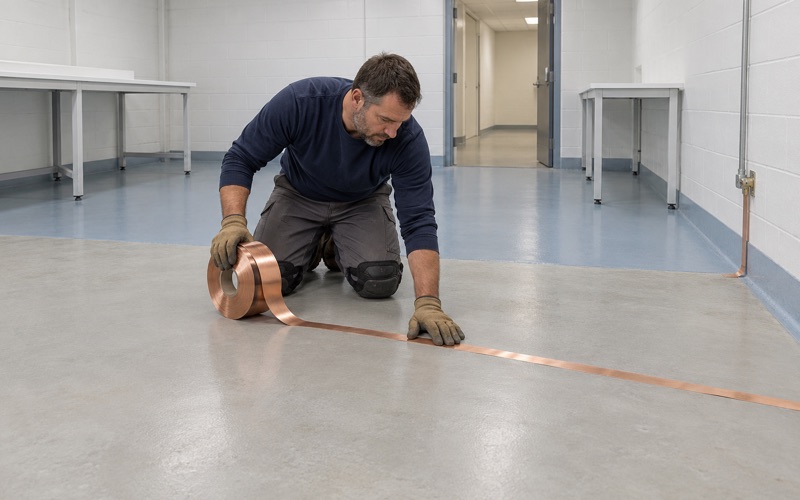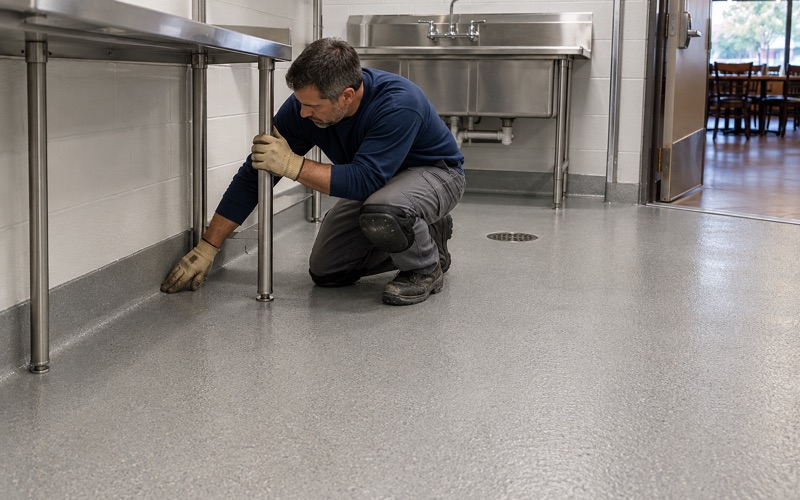
Brookfield Epoxy Flooring handles epoxy flooring in Cedarburg with more than 20 years in the trade behind every schedule we write. The first question on most of our jobs is not color or finish, but when the floor can go back to work. So our schedules start from the hand-back day and count backward through grinding, coating and cure.
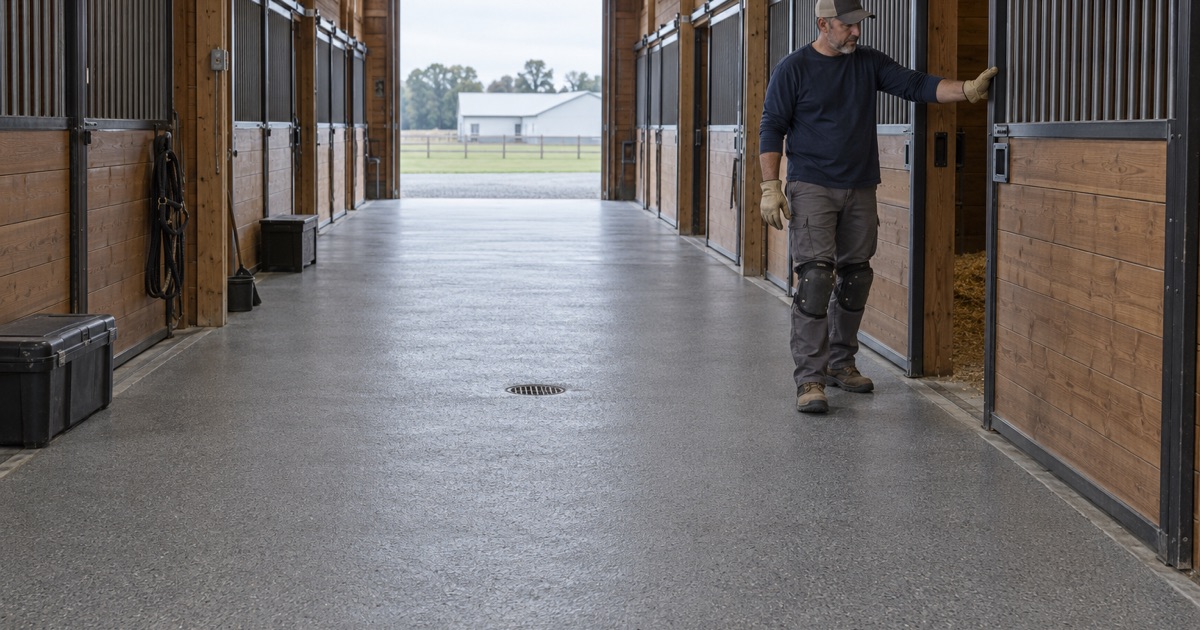
That approach matters most on buildings that change jobs from one week to the next. A floor that holds animals and bedding in one stretch and tables, a stage or stored equipment in the next has to be specified for both uses, not for whichever one happens to be in the room on quote day. We write that dual use into the proposal, along with the product, the system build and the finished thickness, so the owner can check what went down against what was quoted.
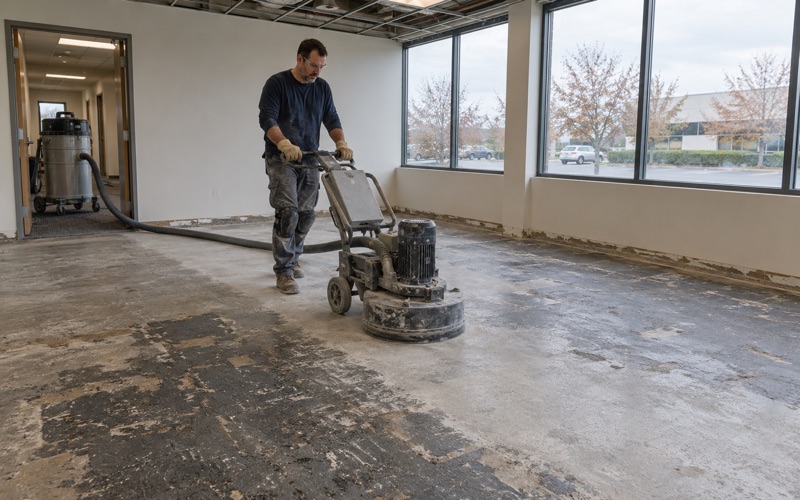
Before any coating, every slab we touch is opened with a diamond grinder or a shot blaster; we do not acid etch. Moisture testing is a line item on the scope rather than an afterthought, and we read cracks, joints and old coating before we price anything.
The Ozaukee County Fairgrounds and Its Written Calendar
Cedarburg is a city in Ozaukee County, about 20 miles north of Milwaukee and close to Interstate 43. The Ozaukee County Fairgrounds sits inside the city limits at W67N866 Washington Avenue, and its year is set down on paper more precisely than most commercial buildings we quote.
A Memorandum With the Agricultural Society
On April 17, 2025, the county’s Public Works Committee took up a memorandum of understanding covering the Ozaukee County Agricultural Society’s use of the fairgrounds. The agenda sheet explains why: the society, which runs the county fair at the beginning of August, shares grounds that are getting busier with events throughout the year, so the county put the dates in writing.
The draft runs five years and renews on its own. It attaches the society’s reservation dates for 2026 through 2030, which makes it the closest thing to a published work calendar a floor contractor could ask for.
Why the Calendar Becomes the Floor Schedule
The memorandum sets dates and cleanup duties; it says nothing about floors or coatings. What it does tell us is when a pavilion or barn is spoken for, which tells us when it is not. A floor in one of these buildings gets fitted into a gap between bookings, with grinding, coating and full cure finished before the next group arrives to set up.
We work backward from the next booking date. If the gap is too short for the system a building needs, we say so at the quote rather than shorten the cure and hope.
Old Buildings, Many Uses
A 2002 study of the fairgrounds found the youth building in use about 190 days a year, the horse barn 46, the 4-H buildings 50 and the rabbit and poultry building 65. The same report called many of the structures old and in poor condition. That combination of heavy, varied use in aging buildings is why a slab here may need repair, or replacement, before it can carry a coating at all, and we say so plainly when it does.
Looking for epoxy-flooring closer to Grafton? See Epoxy-Flooring Services in Grafton.
Horse Barn and Arena Clear by Thursday
The memorandum fixes the fair’s final Sunday as the first Sunday in August. Every hand-back date in the agreement is counted from that Sunday, and so is every window we would offer for floor work on the grounds.
The Fair’s Hold on the Grounds
The society takes full control of the grounds from 8 a.m. on the Saturday two weeks before that Sunday until noon on the second Monday after it. On the 2026 schedule that means setup from July 18 to July 28, the fair itself from July 29 to August 2, and cleanup from August 3 to August 9, with August 6 as the goal.
None of that stretch is floor time. Equipment, exhibits and people are moving through every building, and a fresh coating has no place in the middle of it.
The Thursday Release for the Horse Facility
There is one exception written into the agreement. The horse barn and arena are to be clear by the Thursday following the first Sunday in August, days ahead of the rest of the grounds. The county’s horse facility page describes an indoor barn with 70 stalls, up to 65 more rentable in nearby barns, and a large indoor arena.
For a floor contractor, that Thursday is the earliest date the horse barn could be looked at after the fair. Any work there would have to be planned against the facility’s own bookings from that point on, and we would ask for those dates before quoting a start.
Returned to Previous Condition
The agreement says the grounds will be returned to previous condition upon conclusion of the fair. After the society’s other events it asks for cleanup, sweeping, garbage removal and the heat set to 55 degrees, with county staff cleanup billed by the hour if that is not done.
A floor that is swept out and handed back after event after event has to take that routine without wearing through. That is why we build to a written finished thickness and choose the topcoat for the cleaning it will actually see.
Pavilions Booked All Year, Barns That Double as Storage
Fair week is only the largest booking on the society’s calendar. The reservation schedule attached to the memorandum puts the pavilions and show arena to work across the year, and each event leaves behind a different kind of wear.
Gala, Revue and School Art
On the 2026 schedule, the Fairest of the Fair Gala is set for March 14 with a stage in the South Pavilion. A clothing revue follows on June 2, and school art fills Pavilion North from June 3 to June 5. The Appreciation Dinner is booked in Pavilion South on August 10, the day after the cleanup window closes.
Read as a floor calendar, those dates show where the society’s own bookings leave gaps. They also mean a pavilion floor has to be finished and cured before a stage, dinner tables or art displays are set on it. Other events fill the grounds too, as the county’s own agenda sheet notes, so we confirm a window with the building’s owner before we commit to it.
A Dog Show on Turf
The schedule books the Show Arena for a dog show on May 8 and 9, with a request to leave the turf in place. That note is the kind of detail we look for, since a covered floor is not one anyone can inspect or prepare until the covering comes up.
We have not seen the arena’s floor surface, so we will not guess at what it is. Any quote there would start with a site visit after the turf is lifted, a moisture test and a look at what is actually underneath.
Livestock Week, Banquet Week
The memorandum lets the society store fair items in the open-air poultry and rabbit building, the beef and hog barn and the north half of the maintenance shed. So a barn that holds livestock and bedding during the fair can hold stored fair items afterward, while the pavilions move between exhibits and dinners.
We specify for both lives of a building, not just the one in front of us on the day we visit. In practice that can mean a 100% solids epoxy base built to a stated thickness with a polyaspartic topcoat, or a urethane cement system where cleaning is heavy and frequent. The choice goes in writing, with the reasons.
Cedarburg Barn, Pavilion and Garage Floor Questions
The fairgrounds is the clearest example of a floor with a deadline, but the same habits apply to a Cedarburg garage, basement, shop or storefront: test, grind, specify in writing and schedule around the day the floor is needed back. The questions below are the ones that decide those jobs.
How Do You Know a Slab Is Dry Enough?
We test rather than judge by eye. Depending on the slab, that means ASTM F2170 in-situ relative humidity probes, ASTM F1869 calcium chloride testing or an ASTM D4263 plastic sheet test as a first screen. Wisconsin does not require a vapor retarder under an unconditioned attached garage slab, so a dry-looking garage floor is not assumed to be a dry one.
If the numbers are high, we look at a moisture-mitigation primer or tell the owner the slab should not be coated yet. We also read the warranty exclusions aloud before anything is signed, starting with moisture from below, and we do not sell a coating as a fix for water coming up through a slab.
How Is the Slab Prepared?
Every floor is opened mechanically, by diamond grinding or shot blasting, to the ICRI concrete surface profile the system calls for. Cracks and joints are dealt with first, and in shops and storage buildings the joints get a semirigid filler before any coating goes over them. Grinding dust and slurry are collected on site and never washed down a drain or into a storm sewer.
When Can the Floor Go Back Into Use?
Cure is scheduled against slab temperature and the dew point spread at the surface, not the calendar alone. In an unheated garage or barn that can mean waiting for spring, and we would rather say so than coat a cold slab and chase amine blush or a soft film later. For a building with a booking ahead of it, the cure date is set before the start date.
What Goes in Writing?
Every home job gets a written contract before a deposit is taken, with the products and any warranty spelled out, in line with Wisconsin’s ATCP 110 home improvement rules. For a barn, pavilion or business, we ask the owner and the City of Cedarburg whether a permit applies before anything is scheduled. Ozaukee County lies within the Milwaukee 2015 ozone nonattainment area, so we choose products that meet the federal architectural coatings VOC rule.
- 20+ Years Experience
- Moisture Testing in Every Scope
- Written Proposals and Contracts